
VISITORS
Vol. 6 No. 1 (2026): RUSTIC
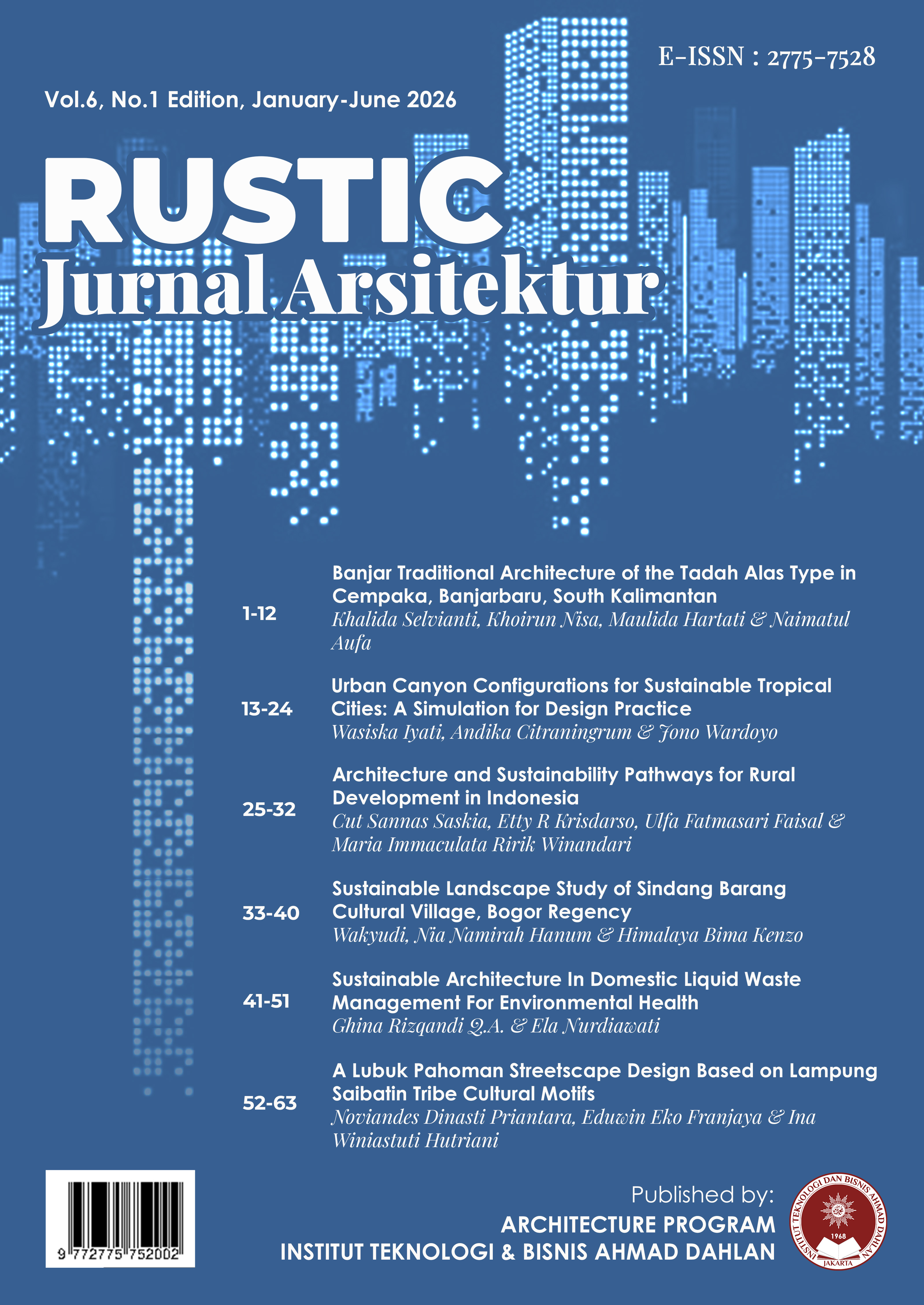
This journal issue brings together six articles that explore the interrelationship between architecture, landscape, culture, and sustainability across diverse Indonesian contexts. The studies range from the micro scale of vernacular architecture—such as the typological examination of a Tadah Alas Banjar house and the spatial–cultural character of Sundanese traditional settlements—to the meso and urban scales addressing environmental performance, infrastructure, and identity. Several articles emphasize sustainability as a unifying theme, including investigations into climate-responsive urban massing and daylight optimization in tropical cities, sustainable landscape planning for domestic wastewater management, and integrated rural landscape development that links ecology, productivity, and local livelihoods. Cultural preservation and place identity also emerge strongly through analyses of cultural villages and heritage streetscapes that respond to modernization pressures while embedding local values and motifs. Collectively, the articles offer multidisciplinary perspectives that demonstrate how architectural and landscape design can function as tools for environmental resilience, cultural continuity, and sustainable development in both rural and urban Indonesian settings.
Published:
2025-12-31


